Every reupholstery conversation in Albemarle eventually reaches the same fork: recover this piece, or put the effort toward a replacement? At Preston's Upholstery L.L.C., that conversation starts with the frame, not the fabric. There is no honest answer from a photo alone. The frame under the fabric, the condition of the foam, and what the piece means to you decide it, and those three things point in different directions often enough that a checklist beats a gut call.
Work through the checks below in order. Early items can end the debate on their own, because a failed frame makes new fabric a poor investment no matter how good the fabric is. Later items are judgment calls, and that is fine. The goal is to know which kind of decision you are making.
The frame decides first
Good frames are built from kiln-dried hardwood, with joints that are glued, doweled, or screwed rather than only stapled. Lift one corner of the piece: a solid frame feels rigid, while a weak one twists or creaks. Sit down hard and shift your weight. Listen for cracking and feel for movement in the arms and back. Springs matter too. Sinuous springs can be replaced or re-clipped, and eight-way hand-tied springs are a sign of a well-built piece worth keeping.
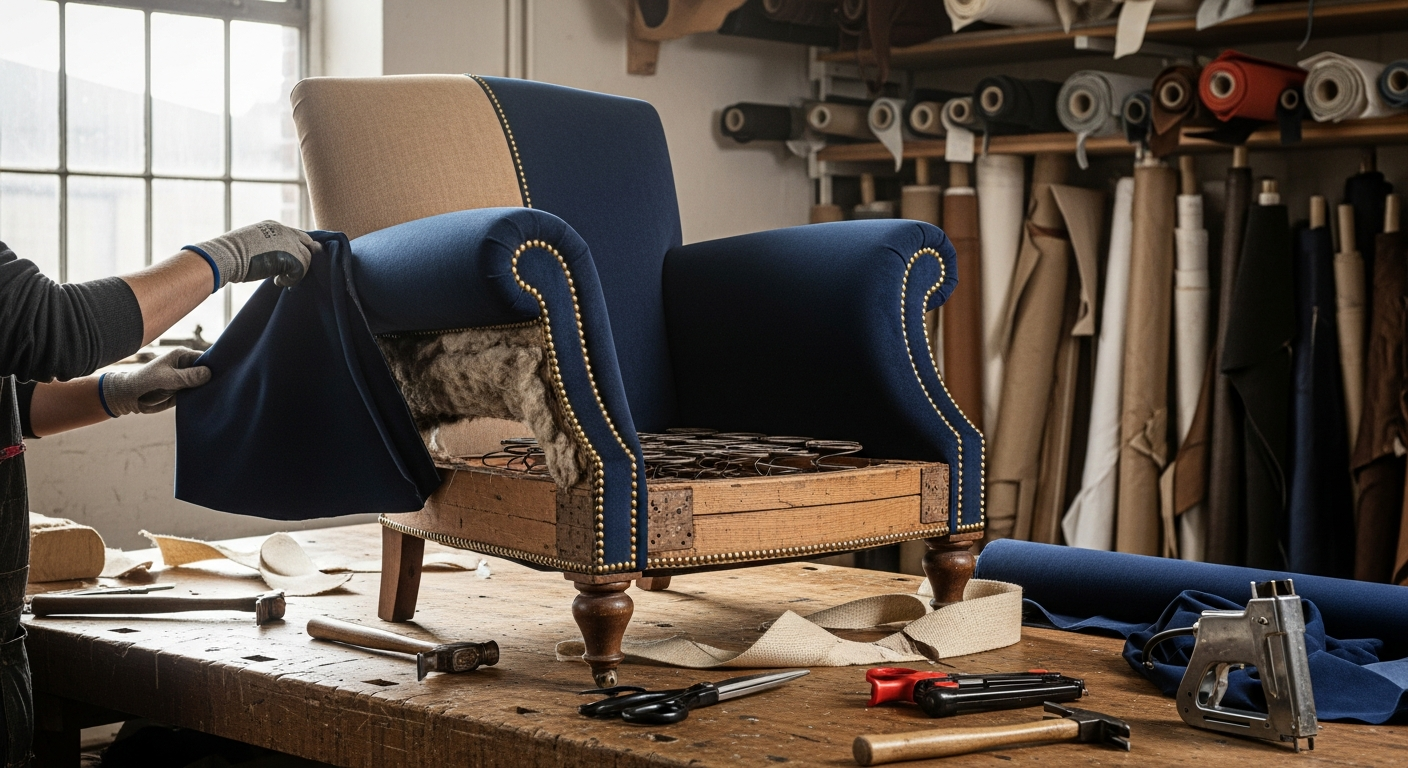
Much inexpensive new furniture uses engineered wood and light stapling, built to a price rather than for decades. An older solid frame, even with ruined fabric, can be the better object. That is the core of the honest math: reupholstery preserves frame quality that a similar-looking new piece may not have at all.
The reupholster-or-replace checklist
- Frame check: hardwood or sturdy engineered frame, joints tight, no cracks, wobble, or creaking under shifting weight. Fail here and replacement usually wins.
- Spring check: press each seat area. Even support passes; a sagging pocket or a broken, poking spring needs repair priced into the decision.
- Foam check: cushions that stay dented, feel crunchy, or have crumbling edges need new foam as well as fabric, which changes the scope of the job.
- Provenance check: solid older construction, a known maker, or a piece built before lightweight construction became common all argue for keeping it.
- Fit check: does the piece actually suit the room and how your household sits? Recovering a chair nobody finds comfortable just preserves the problem.
- Sentiment check: a family piece with real history carries value a store cannot sell you. Name it plainly instead of pretending the decision is only practical.
- Scope check: list everything the job includes, such as fabric, foam, spring work, and wood touch-up, so you compare the full job against a full replacement, not a sale tag.
Foam and fabric are separate questions
Owners often blame fabric for a comfort problem that lives in the foam. If the cover is sound but the seat feels flat, foam replacement alone may restore the piece, and that smaller job changes the comparison entirely. The reverse also happens: fresh foam under worn, splitting fabric buys a short reprieve. Ask the shop to separate the two judgments, cover condition and cushion condition, before you decide on the whole piece.

Sentimental value counts, once
A chair from a parent or a first apartment carries weight, and it is legitimate to recover it for that reason alone. The mistake is letting sentiment quietly override a failed frame check. If the frame is sound and the history is real, recover it and enjoy the decision. If the frame is gone, consider keeping a smaller part of the piece, such as a cushion made from its fabric, rather than funding a full rebuild of a structure that will not hold.
In Albemarle, as anywhere, the pieces most worth recovering share a pattern: solid bones, honest wear on the surface, and an owner who still likes sitting in them. When two of those three are missing, replacement usually stops being the expensive option.
Common questions
Is reupholstery always cheaper than buying new?
No. Quality fabric, foam, and labor add up, and a well-done job can approach the cost of a mid-range new piece. The comparison that matters is frame quality for frame quality, not the lowest sticker in a showroom.
How can I tell if a frame is hardwood?
Weight and rigidity are clues, and a shop can often identify construction from the underside, where the dust cover reveals joints and materials. Hefty, tight, and quiet under stress are the signs you want.
What if only the cushions are worn?
Then the job may be foam and cushion covers rather than full reupholstery. Separating cushion work from frame upholstery is one of the most common ways a smaller job solves the whole complaint.
Photos in this guide are representative stock images.
← All guides from Preston's Upholstery L.L.C.← Back to Preston's Upholstery L.L.C.