The chair comes back from reupholstery looking right and feeling wrong. It sits harder than it did, or the cushion that used to cradle now feels like a board, or the soft sink you loved is suddenly a shallow perch. Owners in Albemarle often assume the shop changed the chair. Usually the foam changed, and foam has two separate properties that are easy to confuse: density and firmness.
Understanding the difference turns a vague complaint into a conversation a shop can act on. Work through the symptoms below in order, the way you would troubleshoot anything else: name what changed, find the likely cause, then decide what can be adjusted at home and what needs the bench.
Density is not firmness
Density is weight: how much material is packed into a cubic foot of foam. Higher density foam holds its shape and support longer, often for many years of daily use, while low density foam breaks down, softens, and crumbles sooner. Firmness, measured as indentation force deflection, is how hard the foam feels when you sit on it. A foam can be dense and soft, or light and firm. The classic disappointment is new low density foam that feels firm for a month and then collapses, because firmness without density has no staying power.
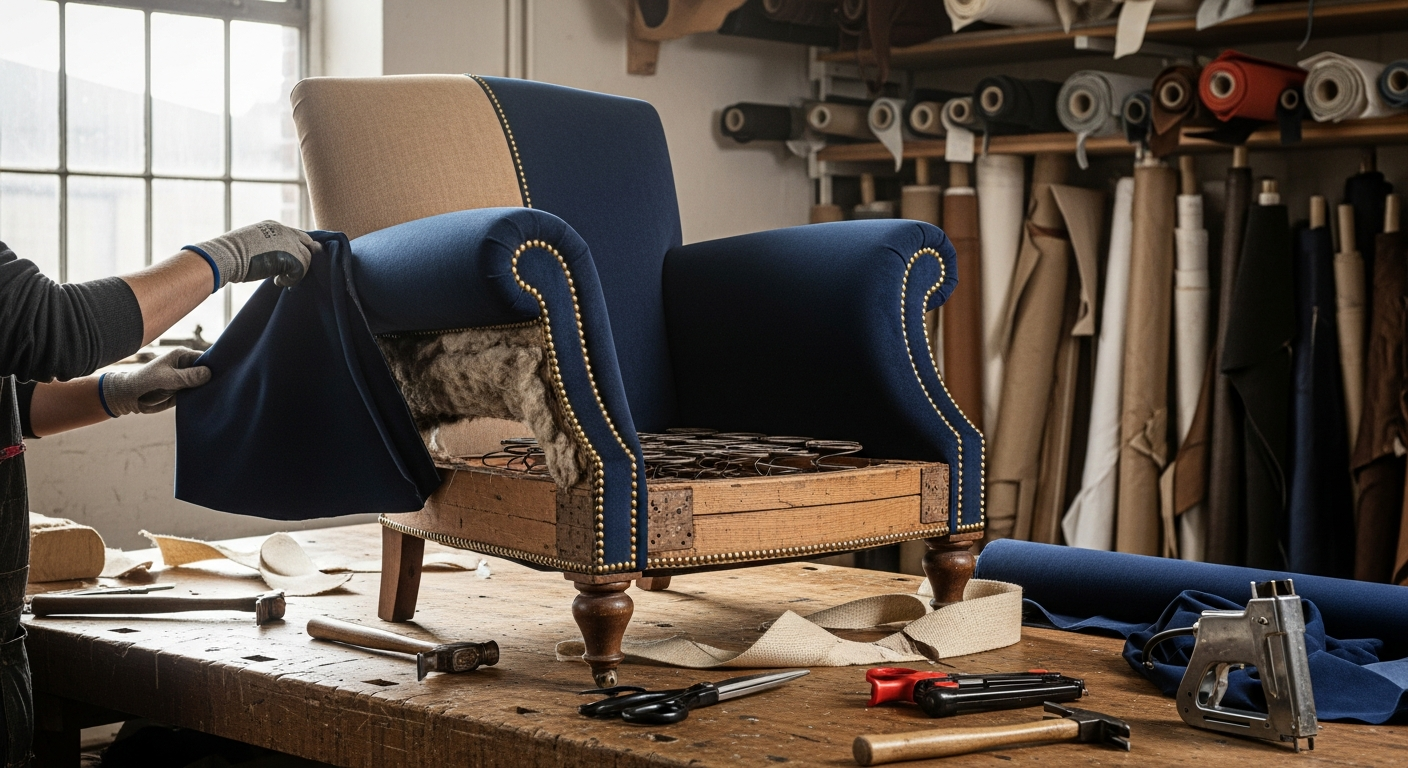
Symptom: the seat feels harder than before
The likely cause is a firmer foam than the worn original, or the same grade compared against foam that had softened for years. Old foam loses firmness gradually, so your memory of the chair is a memory of tired foam. A replacement at the original specification can feel noticeably firmer at first. Foam also breaks in slightly over the first weeks of use. If the seat still feels like a plank after a fair break-in, the grade is wrong for how you sit, and a shop can swap the core or add a softer topper layer.
Symptom: you sink straight to the frame
That points the other way: foam too soft or too thin for the weight it carries, or a support problem under the foam, such as tired springs or webbing. Press the cushion off the chair on a hard floor. If it bottoms out there too, the foam itself is the issue. If it feels fine on the floor but not on the chair, look underneath at the support system.
- Describe the change precisely. Harder, softer, shallower, or uneven each point to a different cause, so avoid a general verdict and name the sensation.
- Do the floor test. Put the cushion on a hard floor and sit. Bottoming out there isolates the foam; a good result there points to springs or webbing.
- Check the rotation. Cushions reinstalled in swapped positions feel oddly different. Confirm each cushion is back on its own side and facing the right way.
- Give new foam a break-in window. Sit in the piece daily for a few weeks. Foam softens modestly as the cells flex, and early impressions often overstate firmness.
- Weigh who sits and how. A reader who perches upright needs different support from someone who naps sideways. Tell the shop the posture, not just the complaint.
- Ask for a layered fix before a full swap. A softer top layer over a supportive core solves many firmness complaints without replacing the whole cushion.
Choosing for how you actually sit
Side sleepers on a sofa, upright readers, and kids who bounce each load foam differently. Seat cushions generally want a supportive core with a comfortable surface, while back cushions can run softer because they carry less weight. In Albemarle heat, very soft foam can also feel warmer, since you sink deeper and more surface contacts you. A medium seat with a soft back is the combination most households settle on after one correction.

The fixable truth is that foam is replaceable without redoing the whole chair. If a recovered piece feels wrong, say so early and specifically. That conversation is a normal part of upholstery work at shops like Preston's Upholstery L.L.C., not an accusation, and it is far easier in the first weeks than after a season of quiet resentment toward a chair.
Common questions
How long should quality seat foam last?
High density foam in daily use commonly holds useful support for a decade or more, while low density foam can tire within a few years. Weight, hours of use, and heat all shorten or extend that range.
Can foam be softened after a chair is finished?
Often, yes. A shop can add a softer topper layer, swap the core for a lower firmness grade, or adjust cushion wrapping. Surface fixes are simpler than structural ones, so describe the problem early.
Why do my two matching cushions feel different?
Uneven use is the usual reason: one seat gets sat in far more. Rotation evens the wear, and if one cushion is genuinely spent, replacing foam in matched pairs keeps the set feeling consistent.
Photos in this guide are representative stock images.
← All guides from Preston's Upholstery L.L.C.← Back to Preston's Upholstery L.L.C.